
Preserving Gullah
Culture Lives When It Is Shared
Gullah culture is one of America's most distinctive living cultural traditions. Rooted in the experiences of West and Central Africans brought to the coastal South, generations of Gullah Geechee people preserved and adapted African traditions while building communities throughout the Sea Islands and coastal regions of South Carolina, North Carolina, Georgia and Florida.

Their influence can be heard in language and music, tasted in Lowcountry foodways, seen in art and craftsmanship, and experienced through storytelling, faith traditions, family customs and community celebrations. Gullah history is also deeply intertwined with some of America's most consequential stories—from slavery and emancipation to the Civil War, Reconstruction, education, land ownership, citizenship and the continuing pursuit of freedom.
Preserving this heritage requires more than remembering the past. Culture survives when it is practiced, taught, performed, shared and passed from one generation to another.
This is the work of Gullah Traveling Theater!

Through theater, storytelling, music, educational programs, cultural demonstrations and community engagement, GTTI brings Gullah history out of books and archives and into experiences people can see, hear, understand and remember. Our artists and tradition bearers connect audiences with the people, places, traditions and stories that have shaped the Lowcountry—and the nation.
WHAT IS GULLAH?
WHAT IS GULLAH?
Gullah—also known as Geechee—refers to a distinct African American people and culture with deep roots in the coastal communities and Sea Islands of the Carolinas, Georgia and Florida. It also refers to the Gullah language, an English-based Creole language shaped by African languages and generations of life in the coastal South.
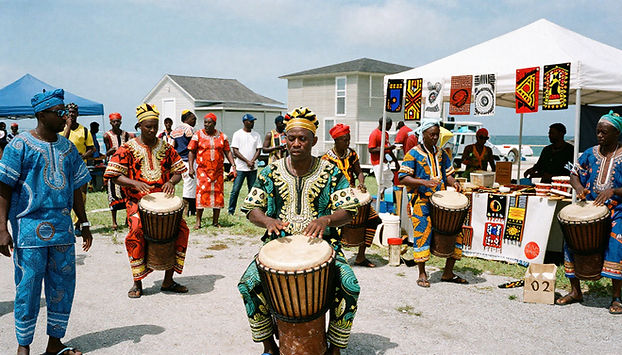
The ancestors of today's Gullah Geechee people came from several regions of West and Central Africa. Many brought knowledge and skills particularly valuable to the coastal economy, including expertise in rice cultivation. Geography also played an important role in the development of Gullah culture. The relative isolation of coastal plantations and Sea Island communities helped generations retain and adapt African influences in language, foodways, music, spirituality, storytelling, crafts and community traditions. Preserving Gullah for Website
Those traditions did not remain isolated from the rest of America. Gullah culture helped shape American culture.